
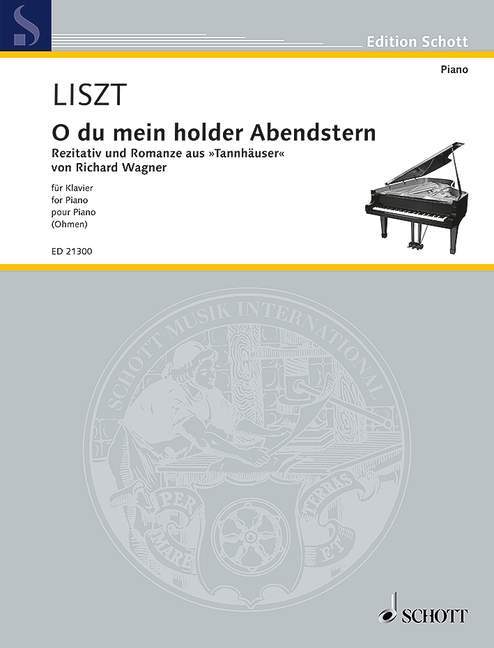


O thou beloved evening star WWV 70 Recitative and Romance from Tannhäuser by Richard Wagner 华格纳.理查德 浪漫曲唐怀瑟 钢琴独奏 朔特版
在李斯特的全部作品中,钢琴改编曲、抄录曲和歌剧改编曲占了很大比重。他甚至改编了理查德-瓦格纳音乐剧中的场景。Lied an den Abendstern》改编自浪漫主义歌剧《唐豪瑟与瓦特堡的战争》的第三幕。李斯特在 1849 年的转录中完全保留了瓦格纳的原作,但他将该场景分为 "朗诵 "和 "浪漫 "两部分。他将乐曲转为升 G 小调和降 A 大调,这两个调在钢琴上听起来更温暖,也更易于演奏浪漫主义钢琴曲。李斯特将瓦格纳原作中中提琴的 "Cantilena "作为音调的亮点,并在降调中加入八度音。对钢琴家和听众来说,这都是一首美妙的转录曲,非常适合音乐会演出和独奏会"
作曲家: Wagner, Richard
编者: Ohmen, Wilhelm
校订者: Liszt, Franz
乐器: piano
出版社: Schott Music
原文简介:
Arrangements for the piano, transcriptions and opera paraphrases take up a large part in Franz Liszt's complete œuvre. He even arranged scenes from the music dramas of Richard Wagner. The transcription of 'Lied an den Abendstern' comes from the third act of the romantic opera Tannhäuser und der Sängerkrieg auf Wartburg. In his transcription of 1849 Liszt kept exactly to Wagner's original but he divided the scene into 'Recitative' and 'Romance'. He transposed the piece to the keys of G sharp minor and A flat major, which sound warmer on the piano and which also allow for a more easy-to-play romantic piano setting. Liszt uses the cantilena of the violoncellos in Wagner's original as tonal highlight with octaves in the descant. A transcription that is beautiful to listen to for both pianist and audience and perfectly suitable for concert performances and recitals.