
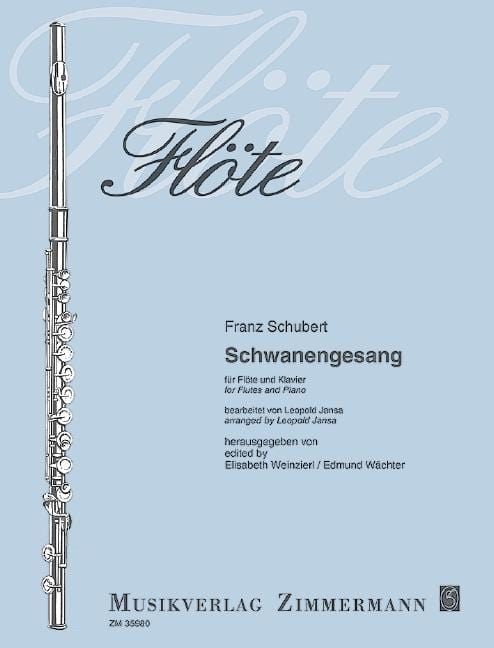


Swan Song 舒伯特 天鹅之歌 长笛加钢琴 齐默尔曼版
浪漫主义时期的重要作曲家几乎完全忽视了长笛作为独奏或室内乐乐器的作用。因此,对这些作曲家适合长笛演奏的作品进行历史性的改编,被认为是对曲目的极大丰富。小提琴家兼作曲家利奥波德-扬沙是 19 世纪上半叶维也纳音乐界的领军人物之一,他在李斯特神父的改编下,将其同时代的弗朗茨-舒伯特的歌曲改编为长笛和钢琴曲。就像为长笛和钢琴改编舒伯特的《冬之旅》(Zimmermann ZM 35060)一样,扬沙也在十首精选天鹅之歌的开头部分保持了与舒伯特原作的一致,并对随后的诗句进行了有品位的修改,其中的点缀部分则参考了李斯特的钢琴改编曲"
作曲家: Schubert, Franz
编者: Waechter, Edmund / Weinzierl, Elisabeth
校订者: Jansa, Leopold
乐器: flute and piano
出版社: Musikverlag Zimmermann
原文简介:
The significant composers of the Romantic period almost entirely ignored the flute as a solo or chamber music instrument. Its for this reason that any historical adaptations of works suitable for the flute by these composers are regarded as an extremely welcome enrichment to the repertoire. In this case, violinist and composer Leopold Jansa who was amongst Viennas leading music personalities in the first half of the 19th century took the songs of his contemporary Franz Schubert and arranged them for flute and piano after Fr. Liszts adaptation. As in the adaptation of Schuberts Winterreise [Winter journey] for flute and piano (Zimmermann ZM 35060), Jansa also remains close to Schuberts original at the beginning of the ten selected swansongs and tastefully modifies the subsequent verses with embellishments which allude to Franz Liszts piano adaptations.