
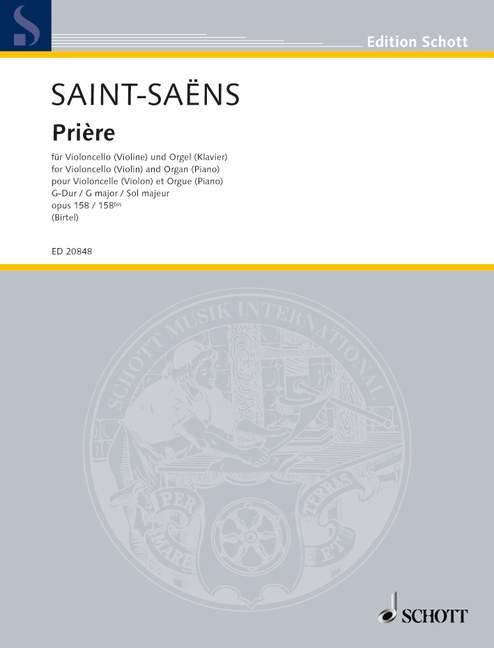


Prière G major op. 158 圣桑斯 大调 大提琴加钢琴 朔特版
卡米耶-圣桑在创作《A 小调第一协奏曲》作品 33 时,写下了大提琴文学的经典之作。但这位法国音乐家还为这一乐器创作了其他作品:更多的独奏作品、第二协奏曲、两首奏鸣曲、钢琴伴奏组曲以及他最著名的作品《动物狂欢节》中的独奏乐章:天鹅。这位法国音乐家不仅创作了一系列室内乐作品和小型作品,还创作了管风琴作品,这也是他音乐生涯的开端。在为管风琴创作了两首幻想曲之后,圣桑最终于 1919 年为大提琴和管风琴创作了作品 158《Prière》(他的祈祷)。这首曲子曲调简单,朗朗上口: 开头的康塔贝舞曲紧接着富有表现力的中段,最后回到安静的开头。一年后,原出版商又出版了小提琴改编曲,作品 158 之二,与大提琴版曲调略有不同,管风琴声部与小提琴声部一致,结尾也有所改动。这两个版本都具有沉思的特点,非常适合音乐会或礼仪演出。管风琴部分是为双手动乐器准备的--作曲家自由标注了几个踏板音符--这样普里埃也可以在钢琴上演奏"
作曲家: Saint-Saëns, Camille
编者: Birtel, Wolfgang
乐器: cello (violin) and organ (piano)
出版社: Schott Music
原文简介:
When writing his Concerto No. 1 in A minor, Op. 33, Camille Saint-Saëns wrote a classic of the violoncello literature. But the French musician even wrote other works for this in-strument: further solo works, a second concerto as well as two sonatas, a suite with piano accompaniment and the solo movement from his probably best-known work, The Carnival of Animals: the Swan. The French musician completed his extensive oeuvre with a series of chamber music pieces and smaller works, but also wrote compositions for the organ, for the instrument he had started his musical career with. After two fantasias for organ, Saint-Saëns eventually wrote his Prière, his Prayer, for violoncello and organ, Op. 158 in 1919. It is a simple and catchy tune: The cantabile beginning is followed by an expressive middle section which leads back to the quiet beginning. One year later, the original publisher also published an adaptation for violin, Op. 158bis which differs from the violoncello version in small corrections, an organ part adjusted to the register of the violin and a modified end-ing. Due to their meditative character, both versions are ideal for concert or liturgical per-formances. The organ part is meant for a double-manual instrument - the few pedal notes being marked ad libitum by the composer - so that Prière can also be performed on the piano.