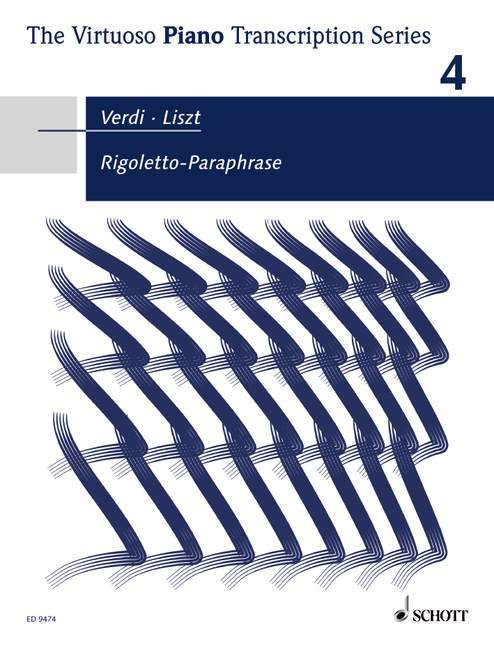
Rigoletto Concert-Paraphrase about the quartet by Franz Liszt
by Schott Music
Original price
$780TWD
-
Original price
$780TWD
Original price
$780TWD
$780TWD
-
$780TWD
Current price
$780TWD
Composer: Liszt, Franz / Verdi, Giuseppe Fortunino Francesco
Instrument: piano
Publisher: Schott Music
Description:
The opera paraphrases take a prominent place among Liszt's complete works as a self-contained art form alongside original compositions. Feruccio Busoni values the high artistic merit of these compositions in the manner in which their well-considered structural planning in the arrangement of form and contrast and the endeavour to expand and embellish the chosen motifs place Liszt's opera fantasies apart from the plebeian potpourri. The early Verdi paraphrases, particularly this Rigoletto-Paraphrase composed in 1859, are far superior to the later paraphrases (including those based on Don Carlos and Aida). This exceedingly brillant concert piece based on arguably the most famous quartet in the history of opera is particularly significant for the unique way in which Liszt is able to bring together the juxtaposition of extreme contrasts - the Duke's ardent declaration of love, Maddalena's prattling rejection, the grief-stricken cantilene of Gilda's and Rigoletto's furious parlando - as in Verdi's original, resulting in a marvellous formal unity.
Instrument: piano
Publisher: Schott Music
Description:
The opera paraphrases take a prominent place among Liszt's complete works as a self-contained art form alongside original compositions. Feruccio Busoni values the high artistic merit of these compositions in the manner in which their well-considered structural planning in the arrangement of form and contrast and the endeavour to expand and embellish the chosen motifs place Liszt's opera fantasies apart from the plebeian potpourri. The early Verdi paraphrases, particularly this Rigoletto-Paraphrase composed in 1859, are far superior to the later paraphrases (including those based on Don Carlos and Aida). This exceedingly brillant concert piece based on arguably the most famous quartet in the history of opera is particularly significant for the unique way in which Liszt is able to bring together the juxtaposition of extreme contrasts - the Duke's ardent declaration of love, Maddalena's prattling rejection, the grief-stricken cantilene of Gilda's and Rigoletto's furious parlando - as in Verdi's original, resulting in a marvellous formal unity.